During the creation of The Annals of the Four Masters in The Convent of Donegal at Bundrowes Friary in Magheracar, Bundoran (1632-1636), Mícheál Ó Cleirigh and his scribes recorded in their Annals, the renowned history of the original Convent of Donegal:
“The monastery of Donegal was commenced by the O’Donnell, i.e. by Hugh Roe, son of Niall Garve O’Donnell, and his wife, Finola, the daughter of O’Brien (Conor-na-srona), and was granted by them to God and the friars of St. Francis for the prosperity of their own souls, and that the monastery might be a burial place for themselves and their descendants; and they not only granted this, but also conferred many other gifts upon them.”
Founded by Nuala O’Donnell (nee O’Connor) and her son, the first Red Hugh O’Donnell in 1474, The Convent of Donegal was a Franciscan Friary, located on the banks of the River Eske in Donegal Town nearby O’Donnell’s Donegal Castle. Closely tied to the Gaelic lordship of the O’Donnell’s of Tír Conaill, the friary became an important religious, political, and educational centre. The Donegal Friary flourished under the O’Donnell’s patronage and was known as one of the most influential Franciscan houses in Ireland in the fifteenth and sixteenth centuries.
Political treaties between the O’Donnells and the O’Connors were signed at the friary in 1539. It was also the final resting place for family members and respected allies, including some of Mícheál Ó Cleirigh’s ancestors. In 1588, English forces plundered the friary and killed the guardian, Thady O’Boyle. Four years later in 1592, Red Hugh O’Donnell escaped imprisonment in Dublin and returned to Tír Conaill. He expelled the English garrison from the friary and allowed the friars to return.
In 1596, The Guardian of the Convent, Seán MacGrath, appealed to King Philip II of Spain for financial assistance to rebuild and refurbish the friary. In 1599, Fr. Matthew (Mateo de) Oviedo, ambassador of the Spanish king, visited the friary and brought gifts from King Philip III of Spain.
During the latter part of The Nine Years War (1593-1603) in 1601, the Donegal Friary suffered damage by English raids and was ultimately devastated during an explosion. After The Convent of Donegal was destroyed, there were efforts to rebuild the friary; however, with the decline of the O’Donnell’s Gaelic power following The Flight of the Earls in 1607, the friary fell into ruin and was never rebuilt. The Convent of Donegal was reestablished in south Donegal at Bundrowes Friary in Magheracar, Bundoran.
Remains: Parts of the choir, transept chapel, chancel, cloisters, nave and graveyard.
Google Maps: Abbey of Donegal
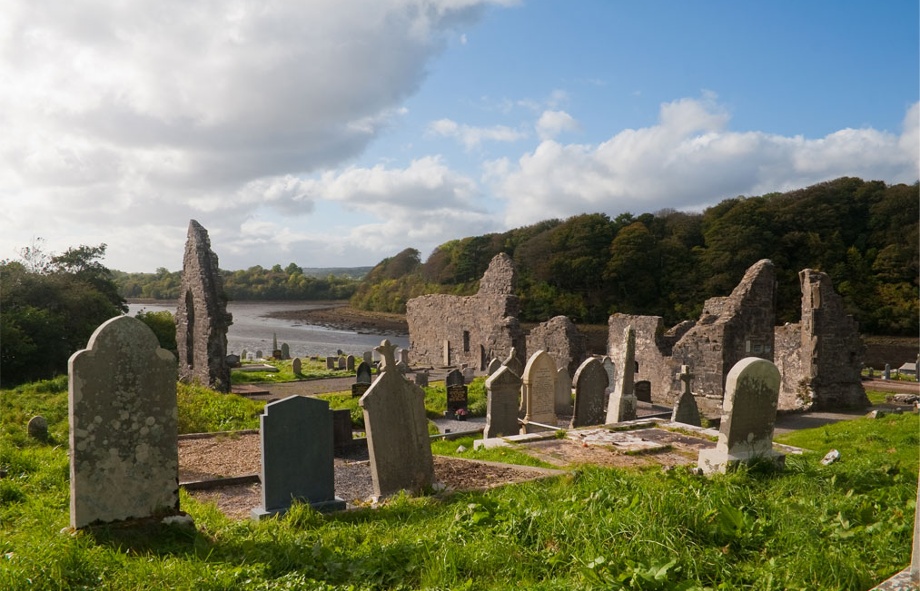
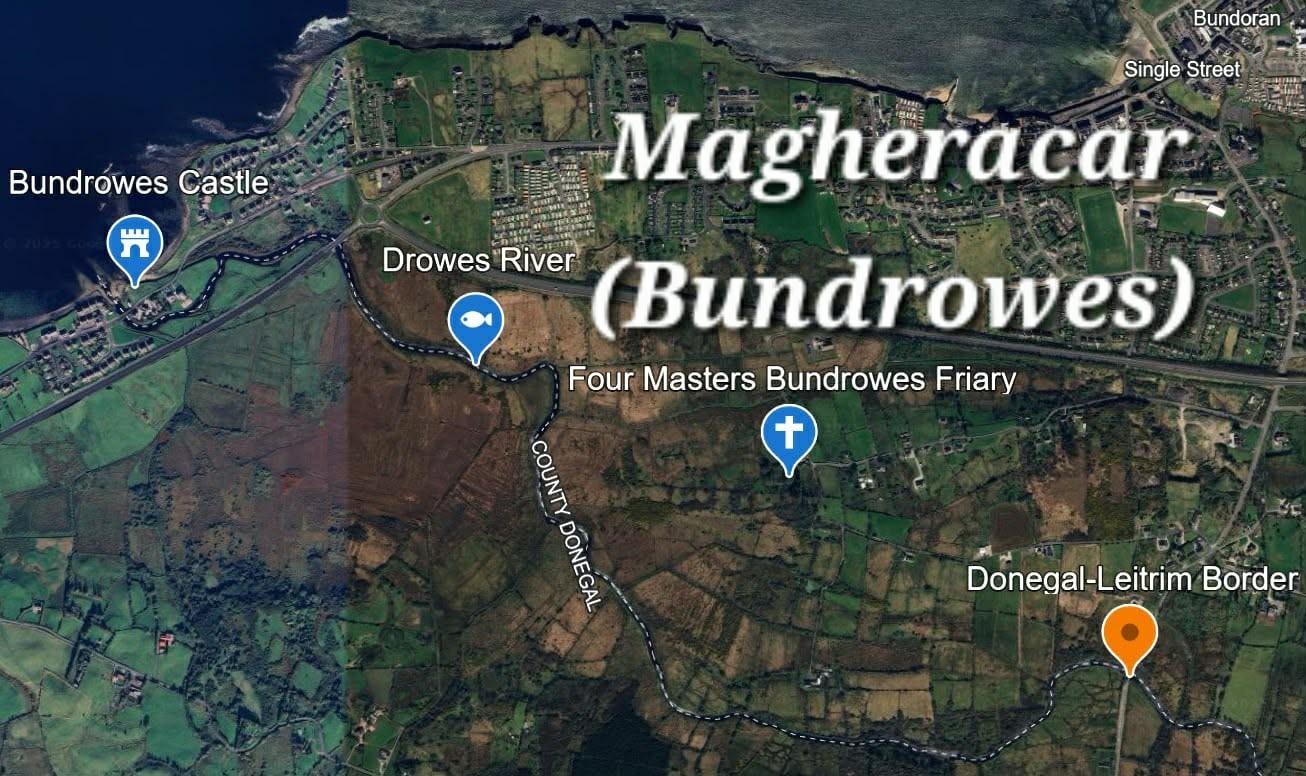
The Convent of Donegal at Bundrowes, located in Magheracar, Bundoran, near the River Drowes, emerged in the early 17th century as a friary of refuge for the Franciscans after the destruction of Donegal Friary in 1601.
Founded on an earlier monastic site, the friary was set up in Lughaidh Ó Cleirigh’s Bundoran lands in Magh Ene, which were originally granted to the Ó Cleirighs by the first Niall Garbh O’Donnell in 1348. Records highlight that at the time the Franciscans established the friary of refuge at Bundrowes (Magheracar) in the early 1600s, the Bundoran lands belonged to “Lughaidh Ó Cleirigh of Bundoran, chronicler” in 1603. With no historical records of Mícheál Ó Cléirigh in Kilbarron, it appears likely that his early life and education took place with his chronicler cousin and teacher, Lughaidh in Bundoran.
Bundrowes Friary transformed into a historically significant centre of Gaelic scholarship during the years 1626-1637. Most notably, Bundrowes Friary served as the literary base of the Franciscan friar, Mícheál Ó Cléirigh and his scribes while compiling The Annals of the Four Masters (1632-1636) – Ireland’s greatest history book of Gaelic scholarship.
The two Guardians of The Convent of Donegal at Bundrowes during Mícheál’s time, were his elder brother, Fr. Bernardine Ó Cleirigh and Fr. Muiris Ultach, a possible relation to Ó Cleirigh’s mother, Onora Ultach.
While Mícheál’s colophons “at Drowes” refer to the Bundrowes Friary in the Bundoran townland of Bundrowes (Magheracar), The Convent of Donegal at “Bundrowis” is also recorded in The Louvain Papers in c.1630. The Franciscan document is ‘A Note of Some Monyes (Monies) sent over to Fr. Hugh Ward in Louvain, and lists the following Irish Franciscan Houses:
“From Ardmach, 20 LSs. From Bundrowis, 20 Ls. From Multifernan, 26 L. 10 shillings. From Drogheda, 10 Ls. From Dublin, 10 Ls. From Kildare, 11 Ls.”
Noted in the scholarship of Fr. Brendan Jennings, Fr. Paul Walsh, Fr. Paddy Gallagher, Dr. Nollaig O’Muraile and Dr. Bernadette Cunningham, and supported by Franciscan historians, Fr. Mícheál MacCraith OFM and Fr. Francis Cotter OFM – Bundrowes Friary was the Franciscan home where Ó Cleirigh wrote The Annals: “Do chum glóire Dé agus onóra na hÉireann” – For the Glory of God and the Honour of Ireland.
The Diocese of Clogher’s archives also record that The Convent of Donegal remained at Bundrowes in Magh Ene during Penal Days. In 1776, The Guardian of the Convent of Donegal, Fr. Dominic Magrath signed a Clogher petition document: “Fr Dominicus McGrath, Guard, Dungalensis et P(araochus) de Moy”. McGrath’s signature as The Guardian of the Convent of Donegal in Magh Ene confirms that 140 years after Mícheál finished The Annals at Bundrowes, The Convent of Donegal survived in the coastal district of Bundoran in Magh Ene Parish.
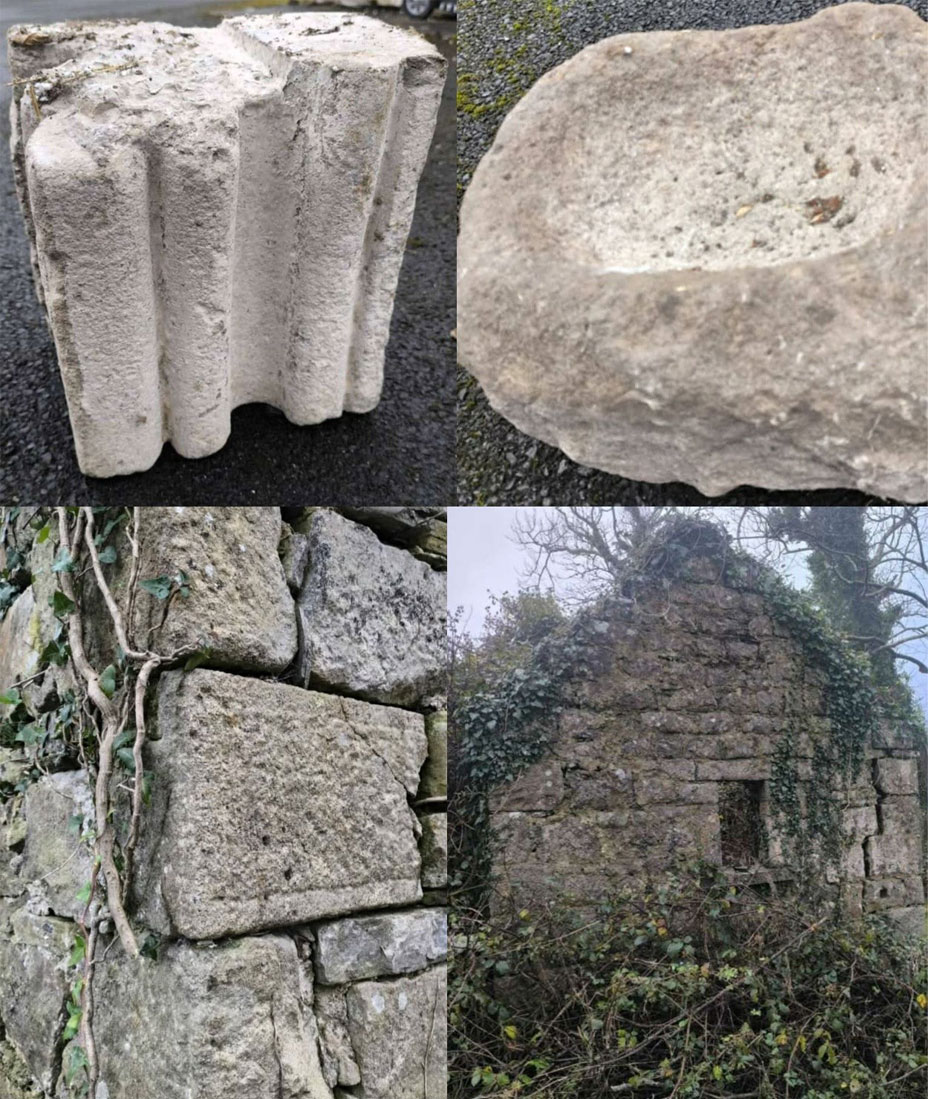
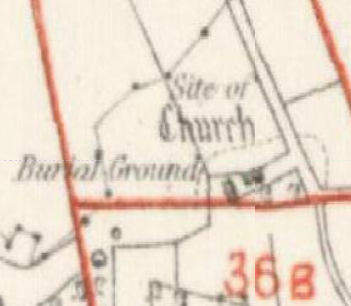
Located at the old Gilmartin and Daly homestead in The Ross, Magheracar, Bundoran, the Bundrowes friary of refuge site is marked as a “Site of Church and Burial Ground” on historic and OS maps from the 1800s. Although the Bundrowes Franciscan House was not rebuilt, some of its stone was repurposed and reused in nearby buildings around the church site.
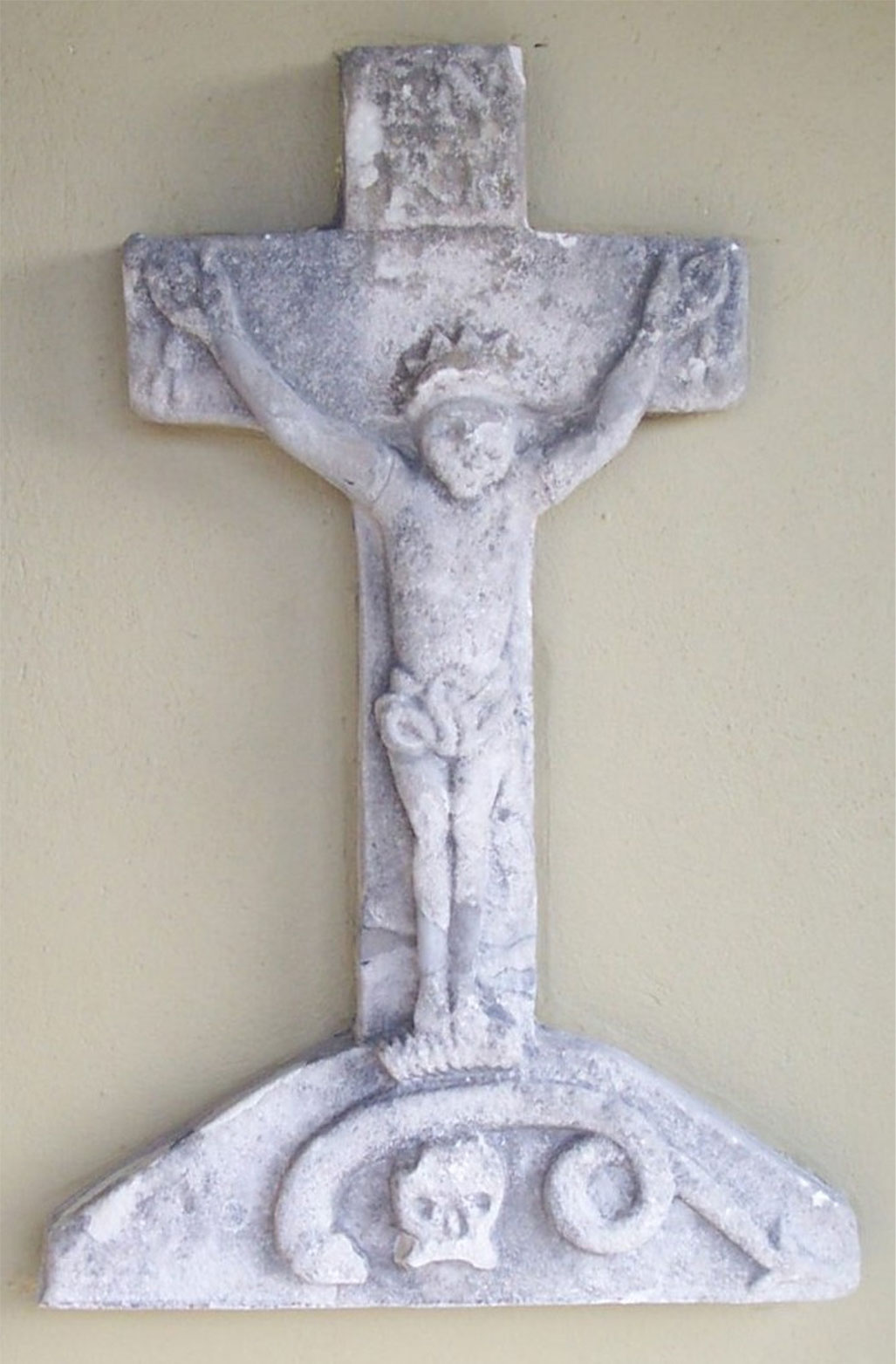
Remains: 17th century ruins, The Friars Well “Tobar na Stealla”, graveyard, holy water font, and a stone cross, colloquially known by the old Bundoran natives as “The Four Masters Cross”, now displayed on The Church of Our Lady, Star of the Sea’s Parochial House in Bundoran.
Google Maps: Bundrowes Four Masters site
Compiled by Éamon Ó Caoineachán from Mary Immaculate College and The Irish Franciscans OFM